Blog
Water hardness

**What Causes an Increase in Water Hardness?**
When the concentration of dissolved mineral salts in water exceeds a certain level, water hardness increases. But why does water sometimes contain high amounts of magnesium, calcium, zinc, iron, and other minerals?
The hardness of water is related to its source and how it is extracted. In general, regardless of the source, water tends to have relatively high hardness before undergoing treatment processes. Even municipal tap water, which passes through various treatment stages, still has noticeable hardness in many regions, to the extent that for uses such as drinking or washing, household water purifiers and softeners are often required. However, water from certain sources tends to be harder than others.
In fact, the primary origin of drinking water hardness is the natural geology of the region, although human activities and climatic conditions can intensify it.
**Main Causes of Increased Water Hardness:**
* **Water Source (Regional Geology):**
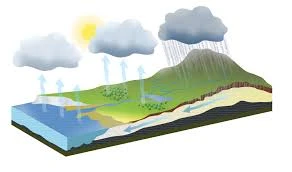
When water is drawn from underground aquifers, wells, or springs that come into contact with limestone, gypsum (CaSO₄·2H₂O), or dolomite, large amounts of calcium and magnesium dissolve into it. Therefore, mountainous and limestone-rich areas typically have harder water.
* **Reduced Rainfall and Lower Groundwater Levels:**
As groundwater levels drop, water has more contact with mineral layers, increasing the concentration of dissolved solids (TDS) and overall hardness.
* **Discharge of Wastewater and Human Activities:**
Industrial and municipal wastewater can introduce calcium, magnesium, and even heavy metals into water sources. Agricultural fertilizers and chemicals that seep into wells and groundwater can further increase hardness.
* **Seasonal and Climate Changes:**
During dry seasons, reduced rainfall, increased evaporation, and less natural dilution lead to higher mineral concentrations. Conversely, heavy rainfall can dilute and reduce water hardness.
* **Quality and Type of Distribution Network:**
Water passing through cement or concrete pipes may absorb calcium. Even corroded metal pipes can introduce additional ions into the water.
* **Lack of Proper Treatment Methods:**
In treatment plants where only chlorination or simple filtration is used, calcium and magnesium ions are not removed. Reducing hardness requires specialized methods such as industrial water softeners, ion exchange resins, or reverse osmosis (RO) systems.
—
**Types of Water Hardness: Temporary and Permanent Hardness**
Understanding the types of water hardness helps in choosing the most effective treatment method. Water hardness is generally divided into two main categories: temporary hardness and permanent hardness.
—
**Temporary Hardness**
Temporary hardness, also known as carbonate hardness, is caused by the presence of calcium and magnesium bicarbonates in water. A key characteristic of this type is that it can be largely removed by boiling, which is why it is called “temporary.”
During boiling, bicarbonates convert into precipitates such as calcium carbonate and magnesium hydroxide, while carbon dioxide gas is released. The result of these reactions is the white scale commonly seen inside kettles and samovars.
—
**Permanent Hardness**
Unlike temporary hardness, permanent hardness (non-carbonate hardness) cannot be removed by boiling. It is caused by the presence of calcium and magnesium sulfates, chlorides, and nitrates, which remain stable even under heat.
To remove permanent hardness, more advanced water treatment methods are required. One of the most common solutions is the use of water softeners. These systems typically use ion exchange resins to reduce hardness by replacing calcium and magnesium ions with sodium ions (Na⁺).


Related Posts
The Role of Economy in Water

The Role of Economy in Water
Water, as one of the most vital natural resources, is closely linked ...
Industrial RO Plant Maintenance
Industrial RO Plant Maintenance
A Practical Guide to Maximizing Uptime and Efficiency
For manufac...
How to Extend the Lifespan of Your RO membrane maintenance
How to Extend the Lifespan of Your RO membrane maintenance: A Practical Maintenance Guide
...
RO Membrane Filter in Dubai UAE
RO Membrane Filter in Dubai UAE: The Complete Buying, Installation and Maintenance Guide (2026)
Du...
Producing Drinking Water with Solar Energy
Producing Drinking Water with Solar Energy; The Green Technology of the 21st Century
Producing D...
LG Membranes
Industrial LG membranes are primarily sold under the LG Water Solutions brand, which is part of LG ...
Nitto Hydronautic
Nitto Hydronautic membranes are advanced separation membranes widely used in water purification and...
Antiscalants
Antiscalants are specialty chemicals used in water treatment systems to prevent the formation and d...
DuPont filter membranes
DuPont filter membranes are used across a wide range of water treatment, industrial, and separation...
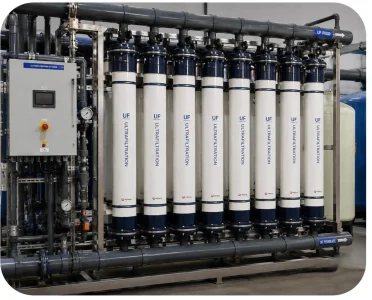
Ultrafiltration in Emirate / Dubai
Ultrafiltration (UF) ( Ultrafiltration in Emirate / Dubai ) filters are membrane-based filtration s...
Quality and Standards of Industrial Water
Industrial water refers to water that has been treated and prepared for use in industrial proc...
What is a pressure vessel and what does it do?
What is a pressure vessel? In industrial and semi-industrial water purification devices, reverse os...