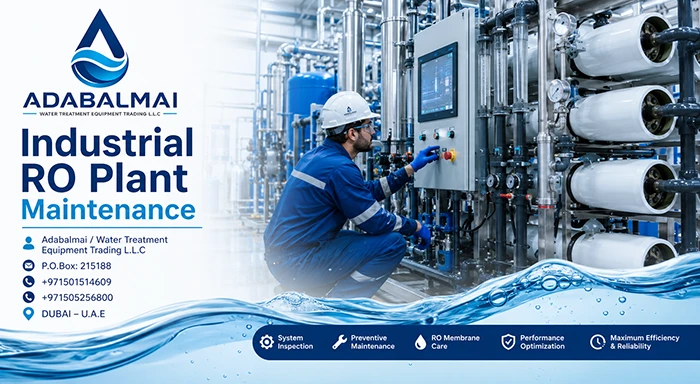
Industrial RO Plant Maintenance
A Practical Guide to Maximizing Uptime and Efficiency
For manufacturing, pharmaceutical, power, food & beverage, and other process industries, Reverse Osmosis (RO) plants are mission-critical infrastructure. Downtime isn’t just an inconvenience—it can halt production lines, compromise product quality, and trigger compliance issues. Industrial RO systems also run harder than commercial or residential units: higher flow rates, variable feed water quality, and continuous duty cycles all place extra stress on membranes and equipment.
Without a disciplined maintenance (Industrial RO Plant Maintenance) program, even a well-engineered industrial RO plant can suffer from declining efficiency, unplanned shutdowns, and expensive membrane replacement. Here’s what industrial plant operators and facility managers need to know.
Why Regular Maintenance Matters
RO membranes are the heart of the system, and they’re also the most sensitive component. Fouling, scaling, and chemical degradation can silently reduce membrane performance over time. Left unchecked, this leads to:
• Higher energy consumption and increased operating costs
• Reduced water output that can bottleneck production
• Poor rejection rates, risking product or process quality
• Premature membrane replacement (a major capital expense at industrial scale)
• Unplanned downtime and production losses
• Regulatory or audit issues in pharma, food & beverage, or power applications
A proactive maintenance plan helps you avoid these issues, extend equipment life, and protect the reliability of your production process.
Key Maintenance Practices
1. Pre-Treatment Monitoring
Most RO problems start upstream. Regularly check sediment filters, carbon filters, and antiscalant dosing systems to ensure feed water quality stays within design specifications.
2. Membrane Cleaning (CIP)
Clean-in-Place (CIP) procedures should be performed based on differential pressure, normalized permeate flow, and salt rejection trends—not just a fixed calendar schedule. Acidic and alkaline cleaning cycles address different types of fouling, from mineral scale to biofilm and organic matter.
3. Pressure and Flow Monitoring
Track feed pressure, permeate flow, and reject flow daily. Sudden changes often signal fouling, scaling, or membrane damage before they become serious problems.
4. Regular Water Quality Testing
Testing TDS, pH, and conductivity at multiple points in the system helps verify membrane performance and catch issues like O-ring failures or seal leaks early.
5. Pump and Valve Inspection
High-pressure pumps, valves, and actuators should be inspected periodically for wear, leaks, and unusual noise or vibration.
6. Cartridge Filter Replacement
Pre-filters should be replaced on a defined schedule or when pressure drop exceeds recommended limits, whichever comes first.
7. System Sanitization
Periodic sanitization prevents microbial growth, particularly important for pharmaceutical, food & beverage, and other systems with strict biological limits or intermittent operation.
8. SCADA and Instrumentation Calibration
Industrial plants typically run on automated SCADA/PLC control. Sensors, flow meters, and pressure transmitters should be calibrated on a fixed schedule to ensure control logic and data logging remain accurate.
9. Redundancy and Standby Equipment Checks
Many industrial sites rely on standby pumps, membranes trains, or dosing systems for continuous operation. These should be exercised and tested regularly so they perform reliably when called upon.
10. Documentation and Compliance Records
For regulated industries, maintaining detailed logs of cleaning cycles, water quality results, and equipment servicing is essential for audits and quality certifications.
Signs Your RO Plant Needs Attention
• Declining permeate flow rate
• Rising differential pressure across membranes
• Increased salt passage (lower quality output)
• Unusual noise from pumps
• Frequent filter clogging
If you notice any of these signs, it’s best to have your system inspected by professionals before minor issues become major repairs.
Partner with Experts for Long-Term Reliability
RO plant maintenance isn’t just about fixing problems—it’s about preventing them. A well-maintained system delivers consistent water quality, lowers operating costs, and reduces the total lifecycle cost of your plant.
Our team specializes in RO plant installation, maintenance, and troubleshooting, helping businesses and communities get the most out of their water treatment investment. Get in touch with us today to schedule a system health check or set up a customized maintenance plan.